
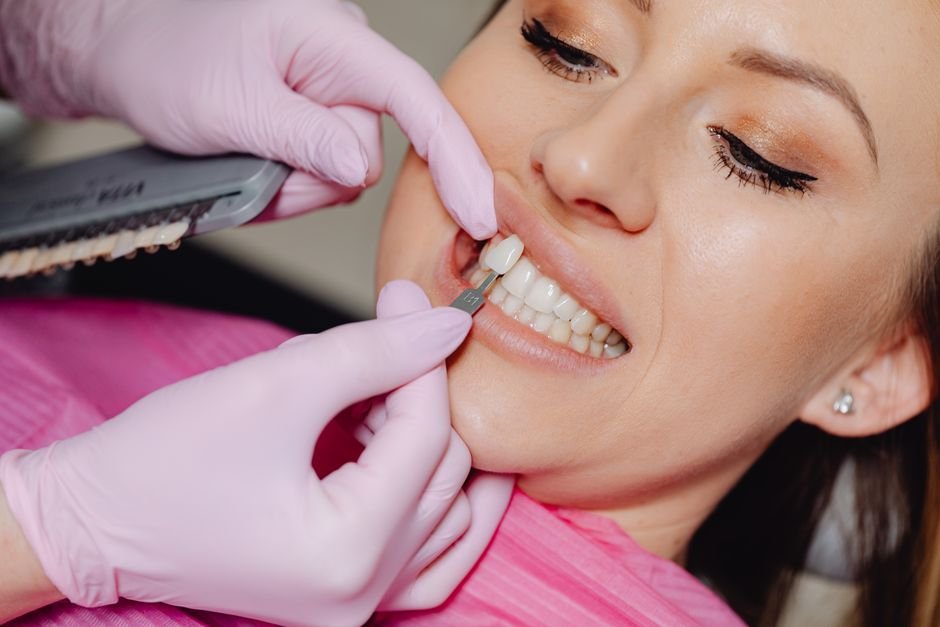
Veneers and crowns are both used to improve the appearance and function of teeth, but they differ in how much of the tooth they cover and why they are typically used. A veneer is a thin shell bonded to the front surface of a tooth, mainly for cosmetic improvement, while a crown covers the entire visible tooth structure and is often used to protect a tooth that has been weakened by decay, cracks, or a large filling. Choosing between them depends on the condition of the tooth and the goal of treatment.
Key takeaways
- Veneers cover only the front surface of a tooth, while crowns cover the whole tooth.
- Veneers are mainly cosmetic; crowns are often needed for structural protection.
- Crowns generally require more removal of natural tooth than veneers.
- Both restorations can last many years with good daily care and regular check-ups.
- The right choice depends on the strength and condition of the underlying tooth.
What Exactly Is a Dental Veneer?
A dental veneer is a thin, custom-made shell, usually crafted from porcelain or composite resin, that is bonded to the front surface of a tooth. Veneers are primarily used to change the way a tooth looks, addressing concerns such as discolouration that has not responded to whitening, minor chips, small gaps, or teeth that appear slightly uneven in shape or alignment. Because the veneer only covers the visible front surface, only a thin layer of enamel usually needs to be adjusted to make room for it.
Porcelain veneers tend to be more resistant to staining and can closely mimic the translucency of natural enamel, while composite veneers are often more affordable and can sometimes be applied in a single visit. Both types are designed to blend in with surrounding teeth, and a well-made veneer can be difficult to distinguish from a natural tooth. Because the change is largely cosmetic, veneers are generally chosen for teeth that are otherwise healthy and structurally sound.
What Exactly Is a Dental Crown?
A dental crown, sometimes called a cap, is a restoration that covers the entire visible portion of a tooth, from the gum line upwards. Crowns are typically recommended when a tooth has lost significant structure due to decay, a large old filling, a crack, or following root canal treatment, all situations where the remaining natural tooth may not be strong enough to withstand normal biting forces on its own. By encasing the whole tooth, a crown restores strength, shape, and function in a way a veneer cannot.
Crowns can be made from various materials, including porcelain fused to metal, all-ceramic materials, or metal alloys, with the choice often depending on the location of the tooth and the forces it needs to withstand. Because a crown must fit over the entire tooth, more of the natural tooth structure is typically reshaped to create space for it compared with a veneer. This makes the crown a more involved restoration, but one that offers considerably more protection for a compromised tooth.
How Much Natural Tooth Is Removed for Each Option?
One of the most significant practical differences between veneers and crowns lies in how conservative each option is towards the natural tooth. Veneers generally require only a thin layer, often less than a millimetre, to be removed from the front surface, leaving most of the tooth’s original structure intact. This makes veneers a comparatively conservative choice when a tooth is healthy and the main concern is purely how it looks.
Crowns, by contrast, require the tooth to be reshaped on all sides so that the crown can fit over it like a cap, which means considerably more of the natural tooth is reduced. While this sounds more invasive, it is usually necessary precisely because the tooth already needs additional support that a veneer’s thin shell could not provide. The decision about how much tooth to remove is always guided by what the individual tooth needs structurally, not simply personal preference.
Which Problems Are Better Suited to Veneers?
Veneers are particularly well suited to addressing cosmetic concerns on teeth that remain structurally healthy. This includes surface staining that whitening treatments have not fully resolved, small chips at the edge of a tooth, minor gaps between front teeth, and slight irregularities in tooth shape or alignment that a person wishes to even out without orthodontic treatment. Because veneers are thin, they are best suited to changes in appearance rather than fixing significant structural weakness.
They tend to work best on the front teeth that show most during smiling and speaking, where appearance matters most and biting forces are comparatively gentle. Veneers are generally not recommended for teeth that already have extensive decay, large fillings, or cracks extending below the gum line, since the thin shell would not provide enough reinforcement in these situations. A thorough dental examination helps determine whether a tooth is a suitable candidate before veneers are chosen.
Which Problems Are Better Suited to Crowns?
Crowns are generally the more appropriate choice when a tooth has suffered enough damage that its long-term strength is in question. This includes teeth with large fillings that no longer have enough natural structure to support them, teeth that have cracked under biting pressure, and teeth that have undergone root canal treatment, which can leave them more brittle over time. In these situations, a crown effectively splints the remaining tooth together and shields it from further damage.
Crowns are also frequently used following certain dental implant procedures, where a crown is attached to the implant to recreate the visible part of a missing tooth. Because crowns are built to withstand full biting and chewing forces, they are often the preferred option for back teeth, which experience considerably more pressure during eating than front teeth. The priority with a crown is restoring reliable function alongside a natural appearance.
How Long Do Veneers and Crowns Typically Last?
Both veneers and crowns are designed to be long-term restorations, though their lifespan depends heavily on the material used and how well they are cared for afterwards. Porcelain veneers often last well over a decade with good care, while composite veneers may need attention or replacement somewhat sooner, since composite resin is generally less resistant to staining and wear than porcelain. Avoiding habits such as biting on hard objects helps extend the life of any veneer.
Crowns, particularly those made from durable materials such as all-ceramic or metal-based options, can also last many years, with some remaining functional for a decade or more. Longevity for both restorations is closely tied to oral hygiene, since the edge where a veneer or crown meets the natural tooth can be a vulnerable spot for decay if not cleaned thoroughly. Grinding habits, if left unmanaged, can also shorten the lifespan of either restoration considerably.
How Should Veneers and Crowns Be Cared for Long Term?
Caring for teeth restored with veneers or crowns is broadly similar to caring for natural teeth, with brushing twice daily and cleaning between teeth remaining essential habits. Particular attention should be paid to the margin where the restoration meets the natural tooth and gum line, as plaque can accumulate there just as it would around an unrestored tooth. Using a soft-bristled brush helps avoid unnecessary wear on both the restoration and surrounding enamel.
Routine dental check-ups allow a dental professional to assess whether a veneer or crown remains well fitted and free of any cracks or leakage that could allow decay to develop underneath. People who grind their teeth are often advised to wear a nightguard to protect both natural teeth and any restorations from excessive force. With consistent care, both veneers and crowns can continue to look and function well for a very long time.
How Do You Decide Which Option Is Right for a Particular Tooth?
Deciding between a veneer and a crown starts with an honest assessment of the tooth’s underlying condition rather than appearance alone. If a tooth is structurally sound and the only concern is its colour, shape, or minor surface flaws, a veneer is usually the more conservative and suitable option, preserving more of the natural tooth. If, however, the tooth has already lost significant structure or strength, a veneer is unlikely to provide adequate long-term protection.
A dental examination, often supported by an X-ray, helps reveal the true condition beneath the surface, including the extent of any previous fillings, cracks, or decay that might not be obvious to the eye. Personal priorities also play a role, since some people place more weight on preserving natural tooth structure while others prioritise long-term durability. Discussing the specific tooth, its history, and realistic expectations with a dental professional is the most reliable way to reach a well-informed decision.
Frequently Asked Questions
Do veneers and crowns feel different from natural teeth?
Once fitted and settled, most people find that both veneers and crowns feel very similar to natural teeth during everyday use, including eating and speaking. Any initial sensation of them feeling slightly different in the mouth typically fades within a short period as the mouth adjusts to their shape.
Can a veneer be used to fix a tooth that already has a large filling?
Generally not, because a veneer only covers the front surface and does not provide the all-round support a heavily filled tooth often needs to withstand biting forces. In this situation, a crown is usually the more suitable option, since it reinforces the entire tooth rather than just its visible front surface.
Is the treatment for fitting a crown more uncomfortable than for a veneer?
Both procedures are generally well tolerated with local anaesthetic used as needed, since more natural tooth structure is typically reshaped for a crown, the appointment may take a little longer, though discomfort during the procedure itself is usually minimal. Afterwards, any mild sensitivity typically settles within a few days as the tooth and gum adjust.
Can veneers or crowns be replaced if they become damaged?
Yes, both veneers and crowns can usually be replaced if they become chipped, cracked, or worn beyond repair, provided the underlying tooth remains healthy enough to support a new restoration. Regular dental check-ups help catch damage early, often before it becomes noticeable or affects how the tooth functions.
Which option preserves more of the natural tooth?
Veneers are generally the more conservative option, since they typically require only a thin layer of the front surface to be adjusted rather than reshaping the entire tooth. Crowns remove more natural structure by necessity, because they are designed to fully encase and reinforce a tooth that already needs additional support.