
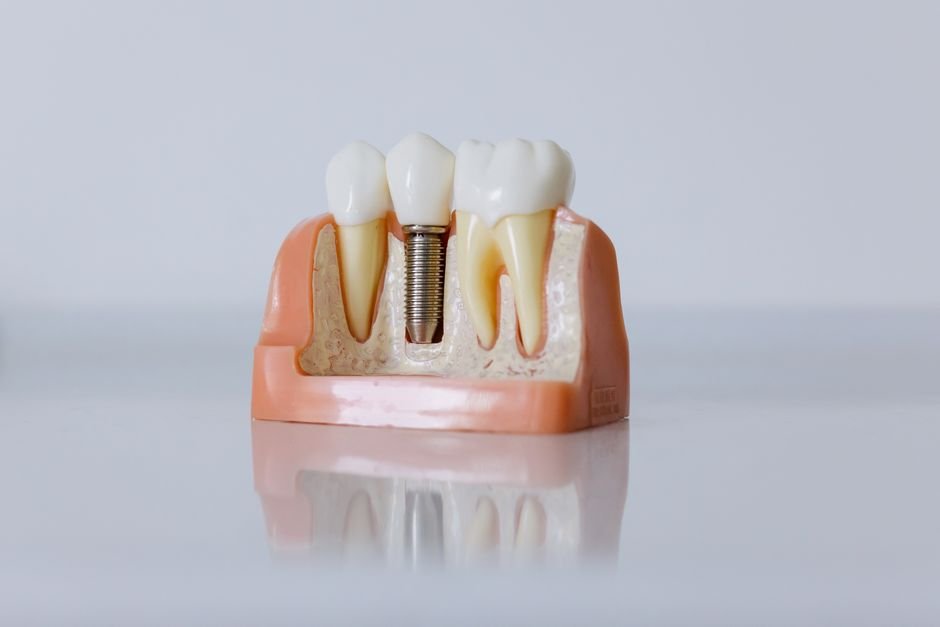
Dental implants support long term oral health by replacing the entire tooth structure, root included, which stops the jawbone from shrinking, keeps neighbouring teeth stable and undisturbed, and restores a bite that functions much like a natural tooth. Unlike a bridge or a denture, an implant transfers chewing forces directly into the bone through a titanium post, which signals the body to maintain bone density in that area. This is the central reason dentists increasingly recommend implants as the most sustainable option after tooth loss, rather than a temporary fix that may create further problems down the line.
Key takeaways
- Implants stimulate the jawbone the way a natural tooth root does, which helps prevent the bone loss that follows tooth extraction.
- Because implants stand independently, neighbouring healthy teeth do not need to be filed down as they would for a bridge.
- Implants distribute chewing force evenly, helping maintain proper bite alignment and reducing strain on remaining teeth.
- Compared with dentures, implants offer more stable, long-term support for facial structure and chewing efficiency.
- Daily brushing, flossing, and routine check-ups are essential to the long-term success of an implant.
How Do Dental Implants Prevent Jawbone Loss After Tooth Loss?
When a tooth is lost, the jawbone beneath it no longer receives the stimulation it needs from chewing and biting, and it begins to gradually resorb. Over time, this can change the shape of the jaw, weaken the surrounding structure, and make future dental treatment more complicated. A dental implant addresses this directly because it is placed into the bone itself, acting as an artificial root that continues to transmit functional pressure whenever a person eats or speaks. This ongoing stimulation encourages the bone to maintain its density rather than deteriorate.
This is one of the clearest long-term health advantages implants have over other replacement options. A bridge or a removable denture sits on top of the gum and does not reach the bone, so resorption can continue even after the visible gap is filled. With an implant, the bone is engaged from the moment it fuses to the titanium post through a process called osseointegration. Maintaining bone volume in this way also helps preserve the natural contours of the jaw for years, rather than just months, after tooth loss occurs.
How Do Implants Help Maintain Proper Bite Alignment?
A missing tooth does not just leave a visible gap; it can also allow neighbouring and opposing teeth to drift out of their original position. Teeth naturally lean towards open spaces over time, and the tooth in the opposite jaw may over-erupt because it no longer meets resistance when biting down. This gradual shifting can throw off the entire bite, leading to uneven wear, jaw discomfort, and strain on the muscles used for chewing. Replacing the missing tooth promptly helps prevent this chain reaction from beginning in the first place.
A dental implant restores a fixed point in the dental arch, much like the original tooth did, which helps keep surrounding teeth anchored in their correct positions. Because the implant crown is shaped and positioned to match the bite precisely, it also helps distribute chewing forces evenly across the mouth rather than concentrating pressure on fewer teeth. Over the long term, this even distribution reduces the likelihood of excessive wear on any single tooth and supports a more comfortable, balanced bite well into later life.
How Do Implants Protect Neighbouring Healthy Teeth?
One of the most significant differences between an implant and a traditional bridge lies in how each treatment affects the teeth next to the gap. A bridge typically requires the two adjacent teeth to be reshaped and filed down so that crowns can be fitted over them to anchor the replacement tooth in place. This means healthy, undamaged tooth structure is permanently altered, even if those teeth had no problems beforehand. Once enamel is removed in this way, it does not grow back, and those teeth become more dependent on their crowns for protection.
A dental implant avoids this altogether because it stands on its own, supported directly by the jawbone rather than by neighbouring teeth. This preserves the natural structure of adjacent teeth, keeping them healthier and reducing their long-term risk of decay or structural weakness under a crown. It also makes future dental work simpler, since there are fewer restorations to manage or eventually replace. For anyone focused on protecting their overall dental health rather than just filling a visible gap, this preservation of healthy tooth structure is a meaningful long-term benefit.
How Do Implants Support Facial Structure Over Time?
The jawbone and teeth work together to support the soft tissues of the face, including the cheeks and the area around the mouth. When teeth are lost and the underlying bone begins to shrink, this support can gradually diminish, sometimes leading to a sunken or aged appearance around the lower face. This change tends to happen slowly, which is why it is often not noticed until a considerable amount of bone has already been lost. Maintaining bone volume is therefore about more than dental function alone.
Because implants preserve jawbone density through ongoing stimulation, they also help maintain the facial support that depends on that bone. This means the natural contours of the face are more likely to be preserved over the years compared with leaving a gap unfilled or relying on options that do not engage the bone directly. While an implant cannot reverse changes that have already occurred, placing one as soon as reasonably possible after tooth loss gives the jawbone the best chance of retaining its shape and supporting facial structure for the long term.
How Do Implants Compare to Dentures for Long-Term Oral Health?
Removable dentures have long been a familiar solution for missing teeth, but they work quite differently from implants when it comes to long-term oral health. Dentures rest on the gums and are held in place by suction, adhesive, or clasps, which means they do not stimulate the underlying bone in the way a natural tooth root does. Over years of wear, the jawbone beneath a denture can continue to shrink, which often means the denture needs to be relined or replaced to keep it fitting properly and comfortably.
Implants, by contrast, integrate with the bone and function independently of the gums, so they do not rely on suction or adhesive and are far less likely to shift while eating or speaking. This stability also tends to make chewing more comfortable and efficient over the long term. While dentures remain a reasonable option for some patients, particularly where several teeth are missing, implants generally offer a more consistent and lower-maintenance solution for preserving oral health and bone structure over many years.
What Does Daily Care for a Dental Implant Look Like?
Caring for a dental implant is straightforward and closely resembles the care given to natural teeth. Brushing twice daily with a soft-bristled brush, using fluoride toothpaste, and cleaning between teeth with floss or an interdental brush all help keep the implant and surrounding gum tissue healthy. Special attention should be paid to the area where the implant crown meets the gum line, since plaque can accumulate there just as it can around a natural tooth, potentially leading to gum inflammation if left unaddressed.
Routine dental check-ups remain just as important with an implant as with natural teeth, allowing a dentist to monitor the surrounding gum and bone tissue and catch any early signs of inflammation, known as peri-implant disease, before they progress. Avoiding excessive force on the implant, such as chewing very hard items or grinding the teeth, also helps protect the restoration over time. With consistent daily hygiene and regular professional monitoring, an implant can continue to function well for a very long period.
How Do Implants Affect Chewing Function and Diet Quality?
Missing teeth, or replacements that do not function well, can quietly limit the range of foods a person feels comfortable eating. Many people with ill-fitting dentures or gaps in their teeth begin avoiding harder or fibrous foods such as raw vegetables, nuts, or certain meats, simply because chewing feels unstable or uncomfortable. Over time, this can narrow the diet in ways that affect overall nutrition, since these food groups often provide important fibre, vitamins, and minerals that support general health as well as oral health.
Because implants are anchored firmly in the jawbone, they restore biting force much closer to that of a natural tooth, which allows most people to return to a fuller and more varied diet with confidence. This improved chewing efficiency also supports better digestion, since food that is chewed thoroughly is easier for the digestive system to process. For many patients, the ability to eat a wider range of foods comfortably again is one of the most noticeable everyday benefits of choosing an implant over other replacement options.
What Determines Long-Term Implant Success Rates?
Dental implants are widely regarded as a reliable long-term solution, and their success depends on a combination of factors that begin even before the implant is placed. Adequate bone density and healthy gum tissue at the outset give the implant a stable foundation, which is why a thorough dental assessment is typically carried out beforehand. The skill and precision involved in placing the implant, along with the quality of the crown fitted on top, also play an important role in how well it performs over the following years.
Beyond the initial placement, long-term success relies heavily on the patient’s ongoing habits. Consistent oral hygiene, avoiding tobacco use, managing conditions such as diabetes that can affect healing and gum health, and attending regular dental reviews all contribute meaningfully to how long an implant lasts. Grinding or clenching habits, if left unmanaged, can also place excess strain on an implant over time. When these factors are addressed well, implants can continue to function effectively for many years, making them a genuinely durable option for long-term oral health.
Frequently Asked Questions
Do dental implants feel and function like natural teeth?
Most people find that implants feel very similar to natural teeth once healing is complete, since the crown is custom-shaped to match the bite and surrounding teeth. Because the implant is anchored securely in the jawbone, it does not shift or move while eating or speaking, which gives it a stable, natural feel that many other tooth replacement options cannot fully replicate.
How long does it typically take for a dental implant to fully integrate with the jawbone?
Osseointegration, the process where the implant fuses with the surrounding bone, generally takes a few months, though the exact timeframe varies depending on individual bone quality and healing rates. During this period, the implant gradually becomes a stable, load-bearing structure, after which a permanent crown can usually be fitted securely on top.
Can someone with existing gum disease still receive a dental implant?
Active gum disease generally needs to be treated and brought under control before an implant can be placed, since healthy gum tissue is important for successful healing and long-term stability. A dentist will typically assess gum health thoroughly beforehand and may recommend treatment first if inflammation or infection is present.
Is bone grafting always necessary before getting a dental implant?
Bone grafting is not required for every patient, but it may be recommended if the jawbone has already lost significant density, often due to a long gap since tooth loss occurred. In these cases, grafting helps rebuild adequate bone volume so the implant has a stable foundation, supporting its long-term success.
What is peri-implant disease and how serious is it for long-term oral health?
Peri-implant disease refers to inflammation of the gum and bone tissue surrounding an implant, usually caused by plaque build-up that is not adequately removed. If left unaddressed, it can progress and affect the stability of the implant over time, which is why consistent daily cleaning and regular dental check-ups are essential for catching and managing it early.