
The early signs of childhood tooth decay include chalky white or brown spots on the teeth, visible pitting on the tooth surface, and increased sensitivity to sweet, hot, or cold foods, all of which can appear well before a cavity becomes obvious or painful. Because young children often cannot clearly describe what they are feeling, parents and caregivers play a central role in noticing these subtle changes early, when treatment options are simplest and least invasive.
Key takeaways
- Chalky white spots are often the earliest visible sign of decay, appearing before cavities form.
- Children may not clearly report pain, so visual and behavioural cues matter more.
- Decay progresses faster in baby teeth than in adult teeth due to thinner enamel.
- Regular dental checkups catch early decay that is easy to miss at home.
- Early intervention often means simpler, less invasive treatment than waiting until pain appears.
What Do the Earliest Visible Signs of Decay Look Like?
The very first visible sign of tooth decay is often a dull, chalky white spot on the tooth surface, which represents an area where enamel has begun losing minerals. This stage, sometimes called demineralisation, occurs before an actual cavity has formed and can, in some cases, still be reversed with fluoride and improved oral hygiene.
If left unaddressed, these white spots can progress to a brown or dark discolouration and eventually to a visible hole or pit in the tooth surface. Checking children’s teeth regularly under good lighting, particularly along the gumline and between teeth, helps catch this early stage before it advances further.
Why Are Baby Teeth More Vulnerable to Rapid Decay?
Baby teeth have thinner enamel than adult teeth, which means decay can progress from an early white spot to a more significant cavity considerably faster than it would in a permanent tooth. This is one of the key reasons early detection matters so much more in young children than it might seem at first glance.
The closer spacing of baby teeth also creates more contact points where plaque can accumulate unnoticed, particularly between teeth where a toothbrush alone cannot fully reach. This combination of thinner enamel and tighter spacing means decay in young children can move from barely visible to significant within a matter of months.
What Behavioural Signs Might Indicate a Problem?
Young children often cannot articulate dental pain clearly, so behavioural changes can be an important early indicator. A child who suddenly avoids chewing on one side of the mouth, becomes reluctant to eat hot or cold foods, or seems unusually fussy around mealtimes may be experiencing discomfort they cannot yet describe in words.
Sleep disruption, particularly waking at night without an obvious cause, can also sometimes be linked to dental discomfort in young children. These signs are not definitive on their own, but combined with a visual check of the teeth, they can prompt a helpful conversation with a dentist sooner rather than later.
How Does Diet Contribute to Early Decay in Children?
Frequent exposure to sugary foods and drinks, including juice, flavoured milk, and snacks eaten throughout the day rather than at set meal times, keeps the mouth in an acidic state for longer periods. This prolonged acid exposure is one of the most significant contributors to early childhood decay, often more so than the total amount of sugar consumed.
Bedtime bottles or sippy cups containing anything other than water are a particularly common contributor, since the sugars sit against the teeth for extended periods overnight when saliva flow naturally decreases. Addressing frequency of exposure, not just quantity, is often the most effective dietary change for reducing decay risk.
What Role Does Brushing Technique Play for Young Children?
Young children typically lack the fine motor skills to brush thoroughly and effectively on their own until around seven or eight years old, which means adult supervision or direct assistance remains important well beyond the toddler years. Missed spots, particularly along the back molars and gumline, are common when children brush unsupervised.
Using an appropriately sized, soft-bristled toothbrush and a pea-sized amount of fluoride toothpaste for children old enough to spit reliably supports effective cleaning without excessive fluoride exposure. Parents finishing off a child’s brushing, even after the child has had a turn, helps ensure a more thorough clean during these developing years.
Why Do Regular Dental Checkups Matter So Much for Young Children?
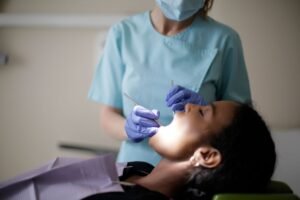
Dentists can identify early decay using tools and techniques that are simply not available at home, including specialised lighting, dental instruments, and sometimes X-rays that reveal decay developing between teeth where it cannot be seen visually. This makes regular checkups a critical layer of detection beyond what parents can observe alone.
Establishing a routine of checkups starting around a child’s first birthday or first tooth, and continuing every six months, means any developing decay is far more likely to be caught at the earliest, most easily treated stage rather than after it has progressed significantly.
How Is Early Decay Typically Treated Compared to Advanced Decay?
Decay caught at the white spot stage can sometimes be managed with fluoride treatment and improved home care alone, without any drilling or filling required. This is the least invasive point at which decay can be addressed, and it is only possible when the problem is identified early.
Once decay has progressed to an actual cavity, a filling becomes necessary, and if left further, more involved treatment such as a crown or extraction may eventually be required for a baby tooth. This progression underscores why early detection meaningfully changes the treatment path a child is likely to experience.
How Can Parents Build a Simple Home Check Into Their Routine?
A brief, regular look at a child’s teeth, ideally under good lighting such as a bathroom light rather than dim evening lighting, can help parents notice changes early. Lifting the lip gently to check the front teeth and gumline, and glancing at the back molars where decay often develops first, takes only a minute or two.
Doing this check consistently, perhaps once every week or two rather than only when a concern arises, makes it more likely that subtle changes will be noticed while they are still in the earliest, most reversible stage rather than only becoming apparent once discomfort begins.
What Should Parents Do If They Notice a Possible Sign of Decay?
If a white spot, discolouration, or pit is noticed, scheduling a dental visit promptly, rather than waiting for the next routine checkup, gives the best chance of catching the issue while it remains at an early and more easily treated stage. Waiting to see if it worsens generally only allows more time for progression.
Bringing specific observations to the appointment, including when the change was first noticed and any behavioural changes like reluctance to eat certain foods, helps the dentist assess the situation more efficiently and gives a clearer picture of how the decay may be progressing.
How Does Genetics Interact With Diet and Hygiene in Decay Risk?
Some children have naturally softer enamel or a mouth chemistry that makes them more prone to decay even with reasonably good habits, which means comparing one child’s dental health directly to a sibling’s is not always a fair measure of how well a routine is working. Genetic factors can meaningfully shift how quickly decay develops.
This does not diminish the importance of diet and hygiene, but it does mean some children need a more vigilant approach than others to achieve the same outcome. A dentist can often flag when a child’s decay risk appears elevated beyond what diet and hygiene alone would explain, and adjust prevention strategies accordingly.
Frequently Asked Questions
What is the very first sign of tooth decay parents should look for?
A dull, chalky white spot on the tooth surface is typically the earliest visible sign, appearing before an actual cavity forms. It represents early mineral loss from the enamel and can sometimes still be reversed.
Can early tooth decay in children be reversed?
In the very earliest white spot stage, before a cavity has actually formed, fluoride treatment and improved oral hygiene can sometimes halt or reverse the process. Once a cavity forms, a filling is generally needed.
Why do baby teeth decay faster than adult teeth?
Baby teeth have thinner enamel than permanent teeth, which allows decay to progress from an early stage to a more significant cavity more quickly, making early detection especially important in young children.
At what age should a child start having dental checkups?
Most guidance recommends starting checkups around a child’s first birthday or the appearance of their first tooth, then continuing roughly every six months to catch any developing issues early.
How can parents check for decay at home between dental visits?
A quick visual check under good lighting, gently lifting the lip to view the front teeth and gumline and glancing at the back molars, can help catch visible changes like white spots or discolouration early.