
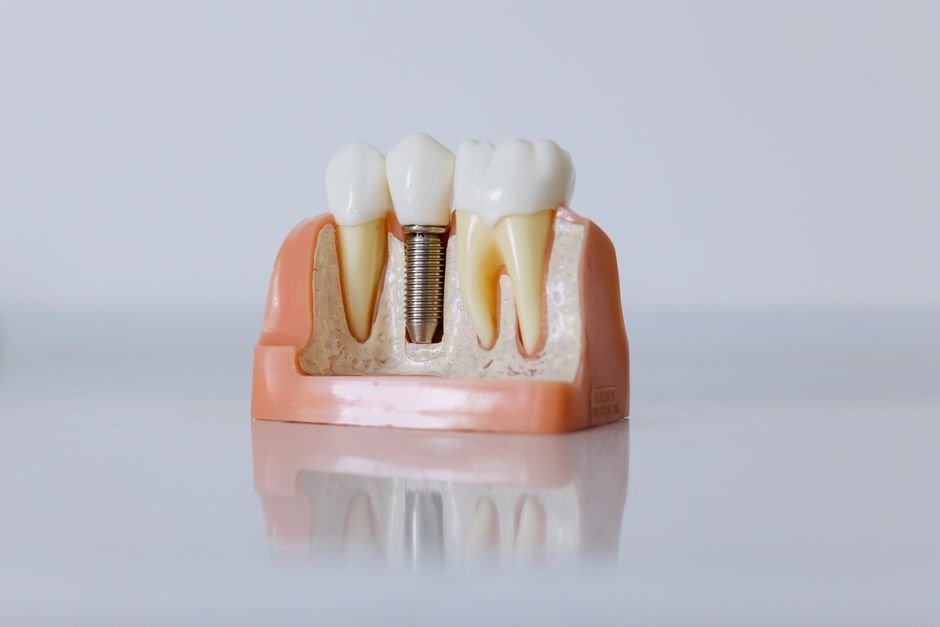
A single tooth implant replaces a missing tooth with a titanium post placed in the jawbone and topped with a crown, while a dental bridge fills the gap by attaching a false tooth to the neighbouring teeth. Implants stand alone, help preserve jawbone and can last for decades, whereas bridges are quicker, usually less expensive upfront and avoid surgery but rely on reshaping or bonding to the adjacent teeth.
Key takeaways
- An implant replaces the tooth root as well as the crown; a bridge only replaces the visible tooth.
- Implants do not depend on neighbouring teeth, while traditional bridges require those teeth to be prepared.
- Implants help maintain jawbone in the gap, whereas bone can gradually shrink under a bridge.
- Bridges are faster to complete and avoid surgery, which suits some patients better.
- The right choice depends on bone health, the condition of nearby teeth, general health, budget and personal preference.
What Is a Single Tooth Implant?
A single tooth implant is made up of three main parts. The implant itself is a small screw-like post, usually made of titanium or sometimes zirconia, that is placed into the jawbone where the root of the missing tooth used to be. Over a period of weeks to months, the bone fuses with the surface of the implant in a process called osseointegration. This creates a firm foundation that behaves much like a natural tooth root.
Once the implant has integrated, a connector called an abutment is attached, and a custom-made crown is fitted on top. The crown is shaped and coloured to blend in with your natural teeth. Because the implant is anchored directly in the bone, it stands independently and does not lean on the teeth either side of the gap. To most people, a well-made implant crown looks and feels very similar to a natural tooth, and it can be brushed and cleaned between in much the same way.
What Is a Dental Bridge?
A dental bridge replaces a missing tooth by spanning the gap with an artificial tooth, called a pontic, that is held in place by the teeth on either side. In a traditional bridge, the neighbouring teeth are filed down and covered with crowns, and the pontic is joined between these crowns as a single unit. The bridge is then cemented in place and cannot be removed by the patient. This is one of the longest-established methods of replacing a single missing tooth.
There are other types of bridge too. A resin-bonded bridge, sometimes called an adhesive or Maryland bridge, uses a thin metal or ceramic wing bonded to the back of a neighbouring tooth, requiring little or no drilling. A cantilever bridge is supported by a tooth on only one side of the gap. Each design has its own uses, depending on where the gap is, how much biting force the area takes and the condition of the surrounding teeth. Your dentist will recommend the most suitable type for your mouth.
How Do the Treatment Processes Compare?
Implant treatment typically takes longer from start to finish. It begins with an assessment, often including X-rays or a three-dimensional scan, to check bone volume and plan the position of the implant. The implant is placed in a minor surgical procedure, usually under local anaesthetic. A healing period of several weeks to a few months follows while the implant integrates with the bone. If bone grafting is needed first, the overall timeline can extend further. Finally, the abutment and crown are fitted.
A bridge can usually be completed much more quickly, often over two or three appointments within a few weeks. At the first visit, the supporting teeth are prepared and impressions or digital scans are taken, and a temporary bridge may be fitted. The permanent bridge is then made in a laboratory and cemented at a later appointment. For people who want the gap filled quickly, or who are not keen on surgery, this shorter and simpler process can be a significant advantage when weighing up the options.
How Does Each Option Affect Neighbouring Teeth?
One of the biggest differences between implants and traditional bridges is the effect on the teeth next to the gap. To fit a conventional bridge, the adjacent teeth must be reshaped so that crowns can sit over them. This involves removing healthy tooth structure, which cannot be replaced. If those teeth were previously healthy and unrestored, this is a considerable trade-off. Over time, the supporting teeth also carry extra load and can be at greater risk of decay at the crown margins or of needing root canal treatment.
An implant, by contrast, stands on its own and leaves the neighbouring teeth untouched. This is particularly appealing when the adjacent teeth are healthy and free of large fillings. However, if the neighbouring teeth already have large fillings or crowns and would benefit from being covered anyway, a bridge may make good sense, as it restores those teeth while also filling the gap. Resin-bonded bridges sit somewhere in between, as they require minimal preparation but are generally suited to lower-stress areas of the mouth.
What Happens to the Jawbone With Each Option?
When a tooth is lost, the bone that once surrounded its root no longer receives stimulation from chewing. Over time, this bone gradually shrinks in height and width. This process can change the shape of the gum in the gap and, in larger areas of tooth loss, can affect facial support. The rate of bone loss varies between individuals, but it is a natural response that continues for as long as the area remains without a root.
Because an implant replaces the root and transfers chewing forces into the bone, it helps maintain bone volume in the area. A bridge, on the other hand, sits on top of the gum, so the bone beneath the pontic can continue to shrink slowly. In some cases, this can lead to a small visible gap appearing under the false tooth over the years, which may affect appearance or trap food. For people concerned about preserving bone and the natural contours of their gums, this is often a deciding factor.
How Long Do Implants and Bridges Last?
Dental implants are designed to be a long-term solution. With good oral hygiene, regular check-ups and healthy habits, the implant post itself can last for decades and may remain for life. The crown on top experiences normal wear and tear and may need to be replaced at some point, often after many years. Implant success can be affected by smoking, uncontrolled diabetes, teeth grinding and gum inflammation around the implant, so ongoing care is important.
Bridges also offer good longevity, often lasting many years, but they typically need replacing sooner than an implant. Their lifespan depends heavily on the health of the supporting teeth. If one of those teeth develops decay or gum problems, the whole bridge may need to be removed and remade. Resin-bonded bridges can occasionally come loose and need rebonding. In general, both options can serve you well for a long time, provided you keep the surrounding teeth and gums healthy and attend regular dental appointments.
How Do Cleaning and Maintenance Differ?
Caring for an implant is very similar to caring for a natural tooth. You brush it twice a day and clean between it and the neighbouring teeth with floss or interdental brushes. The main concern is keeping the gum around the implant healthy, as plaque build-up can lead to inflammation called peri-implantitis, which may threaten the bone supporting the implant. Regular hygiene visits allow your dental team to check the implant and clean areas that are hard to reach at home.
A bridge requires a slightly different cleaning approach. Because the pontic and the crowns are joined together, ordinary floss cannot pass between them. Instead, you need to clean underneath the false tooth using a floss threader, special bridge floss with a stiffened end, a small interdental brush or a water flosser. This step is important, as food and plaque trapped under the bridge can cause decay in the supporting teeth and gum inflammation. Your dentist or hygienist can show you the best technique for your bridge.
How Do You Decide Which Option Is Right for You?
There is no single answer that suits everyone. An implant is often recommended when the neighbouring teeth are healthy, there is enough bone or bone can be rebuilt, and the patient is in good general health and willing to wait for treatment to complete. It may also be favoured by people who want the most natural-feeling, independent replacement and who value long-term bone preservation. Upfront costs are usually higher, but implants can offer good value over their lifespan.
A bridge may be the better choice if the adjacent teeth already need crowns, if surgery is not advisable for medical reasons, if there is insufficient bone and grafting is not wanted, or if a quicker result is important. Cost and personal preference also play a role. The best approach is to have a thorough consultation where your dentist explains the pros and cons of each option for your specific mouth, so you can make an informed decision you feel comfortable with.
Frequently Asked Questions
Is an implant better than a bridge?
Neither is automatically better. Implants preserve neighbouring teeth and jawbone and often last longer, while bridges are quicker, avoid surgery and can suit people whose adjacent teeth already need crowns. The right option depends on your oral health, general health and personal preferences.
Does getting a bridge damage the teeth next to the gap?
A traditional bridge requires the neighbouring teeth to be reshaped so crowns can fit over them, which permanently removes some tooth structure. Resin-bonded bridges need little or no drilling, but they are generally suited to areas of the mouth that take less biting force.
Is getting a dental implant painful?
Implant placement is usually done under local anaesthetic, so you should not feel pain during the procedure. Some tenderness and swelling afterwards is common for a few days and can usually be managed with standard pain relief and following your dentist’s aftercare advice.
Can I switch from a bridge to an implant later?
It is often possible to replace a bridge with an implant in the future, although bone loss under the bridge may mean bone grafting is needed first. Your dentist can assess the area with X-rays or a scan to see whether an implant would be suitable.
How do I clean under a dental bridge?
Because the false tooth is joined to the supporting crowns, you need a floss threader, bridge floss, a small interdental brush or a water flosser to clean underneath it. Doing this daily helps prevent decay in the supporting teeth and inflammation of the gums.